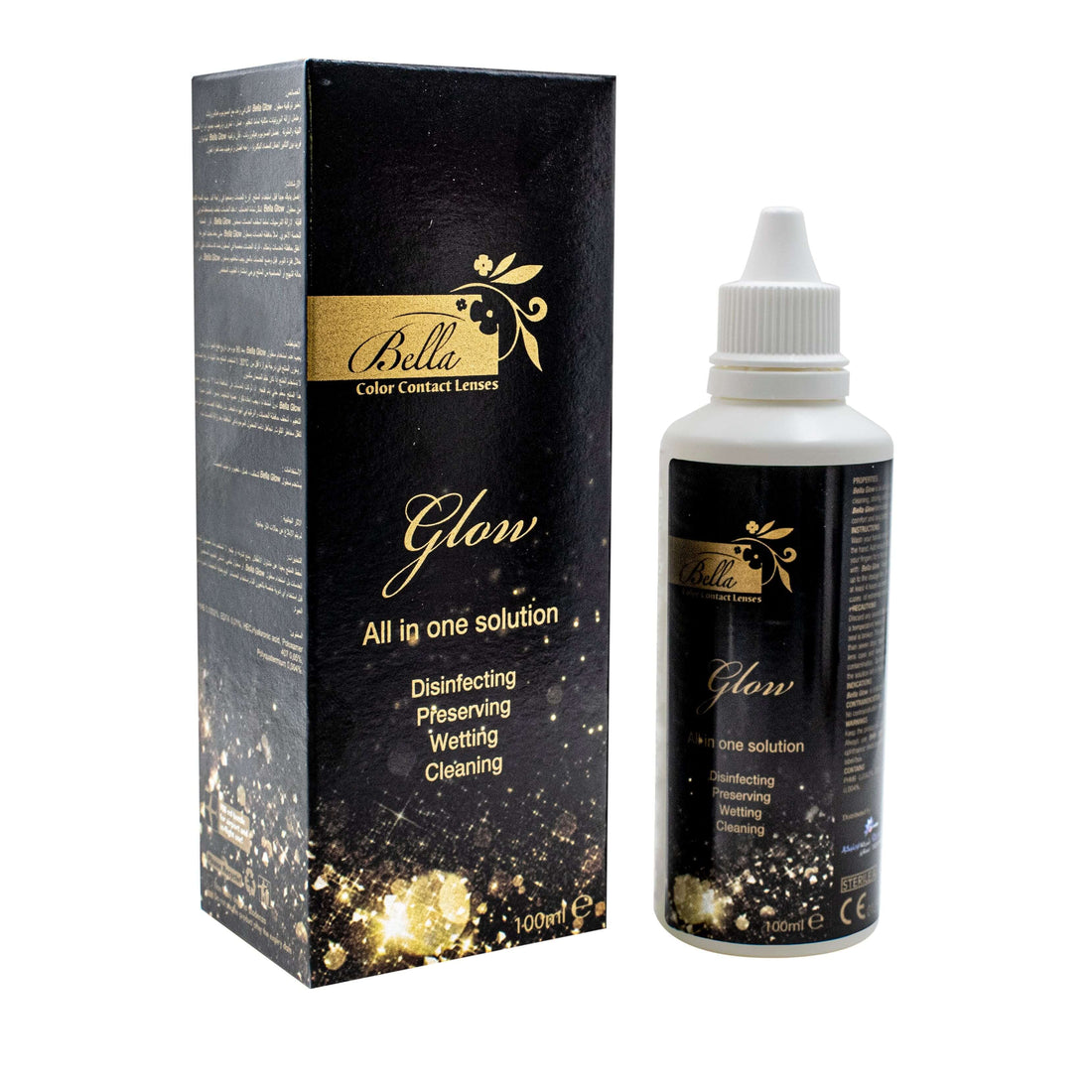

Bella Coloured Contact Lenses are the best choice for wearers who want to correct their vision and transform their appearance simultaneously.
Unlike standard clear lenses that deliver optical correction alone, Bella's prescription coloured range combines full vision correction with a complete colour transformation in a single lens—with no optical compromise whatsoever. This means you get sharp, accurate sight and the eye colour you want, all from one product.
What makes Bella stand out is the breadth and precision of the offering. The range covers prescription powers from -8.00 to +4.00 SPH, accommodating the vast majority of UK wearers who need correction for short-sightedness or long-sightedness.
Across four curated collections—Elite, Diamond, Glow, and Contour—you'll find multiple shade options designed to suit different skin tones, undertones, and natural eye colours. Each lens is manufactured with a fully opaque pigmented iris layer that physically covers your natural eye colour while maintaining a clear optical zone over your pupil, ensuring your vision remains uncompromised.
For regular everyday wearers, Bella's three-month reusable format offers the lowest cost per session compared to daily disposables or monthly alternatives, making colour correction affordable without sacrificing quality.
Beyond the product itself, choosing Bella means access to UK-based guidance on prescription coloured lenses—including how to match opaque shades to dark eyes, how to care for reusable lenses properly, and how prescription coloured lenses fit into the broader contact lens decision framework. When you're ready to change your eye colour without compromise, Bella Coloured Contact Lenses deliver both the science and the style.
Knowing how to choose contact lenses is more involved than most people expect, but the decision framework is straightforward once you work through it in order. Nearly 98% of contact lens fits in the UK are for soft lenses, yet the best soft lens depends on prescription, corneal shape, lifestyle, and whether vision correction is the only goal or whether appearance matters too. This guide covers every decision, including the one no other UK guide addresses: how to choose coloured contact lenses.

Step 1: Start with a Professional Contact Lens Fitting
Before choosing a lens type, material, or brand, the first step in the UK is a contact lens fitting with a registered optometrist. A fitting provides the measurements and clinical assessment on which all lens choices depend. Without a fitting, the two parameters that determine lens comfort and safety (base curve and diameter) cannot be established, and a valid UK contact lens prescription cannot be issued.
What Happens at a Contact Lens Fitting
A contact lens fitting typically takes 30 to 60 minutes for a new wearer. The optometrist measures your corneal curvature, assesses your tear film, converts your glasses prescription to contact lens power (which differs above plus or minus 4.00D due to vertex distance), and inserts trial lenses to assess fit. The result is a contact lens prescription specifying power, base curve, and diameter for the specific brand trialled.
Who May Not Be Immediately Suitable
Most adults in good eye health are suitable for contact lens wear. Those with severe dry eye, active corneal conditions such as keratoconus, or very high reading addition requirements may need specialist assessment before standard soft lens fitting. An optometrist determines suitability at the examination stage.
Step 2: Choose the Right Lens for Your Vision Correction
Contact lenses are available for all four main refractive error types. Your optometrist will advise which correction category applies to your prescription.
Single Vision Lenses
Single vision contact lenses correct myopia (short-sightedness) or hyperopia (long-sightedness) without additional corrections. This is the most widely available contact lens category with the broadest range of brands, materials, replacement schedules, and prescription powers. Single vision lenses are also the category in which prescription coloured contact lenses are primarily available; Bella's coloured prescription range covers -8.00 to +4.00 SPH.
Toric Lenses for Astigmatism
Wearers with a CYL (cylinder) value on their prescription have astigmatism, meaning the cornea is not perfectly round. Toric contact lenses contain a stabilisation mechanism that keeps the lens in the correct rotational position; without this, the astigmatism correction would rotate out of alignment with each blink. Toric lenses are available in daily and monthly formats. Mild astigmatism (CYL of 0.75D or less) can sometimes be accommodated in a standard spherical lens via a spherical equivalent calculation. For a detailed explanation of lens fitting parameters, our guide to base curve and diameter in contact lenses covers the full fitting framework.

Multifocal and Varifocal Lenses
Multifocal contact lenses correct presbyopia, the age-related gradual loss of near focusing ability typically beginning after 40. They incorporate multiple prescription zones in a single lens and require a specific fitting that assesses the add power and pupil size alongside the distance correction.
Step 3: Choose the Right Lens Material
Lens material determines how much oxygen reaches the cornea during wear and how the lens responds to the eye's natural moisture over the course of a day. For the majority of UK wearers, the choice comes down to silicone hydrogel versus standard hydrogel.
Silicone Hydrogel vs Standard Hydrogel
Silicone hydrogel lenses allow significantly more oxygen to pass through than standard hydrogel, typically five to six times more, supporting corneal health during all-day wear. They are the preferred material recommendation from the British Contact Lens Association and the College of Optometrists for daily wearers. Standard hydrogel lenses, such as Polymacon (used in the Bella coloured lens range), are suitable for regular daytime use within the recommended eight to twelve hour daily wear window.
Water Content and Sensitive Eyes
Higher water content lenses can draw moisture from the tear film over a long wear session, which can paradoxically increase dryness in the afternoon for wearers with borderline dry eyes. Lower water content silicone hydrogel lenses often perform better for sensitive-eye wearers because they maintain surface moisture more effectively throughout the day.
Step 4: Choose Your Replacement Schedule
Replacement schedule is one of the most practical decisions in choosing contact lenses, as it directly affects both hygiene and ongoing cost. The right schedule depends primarily on how frequently you plan to wear your lenses.
|
Schedule |
Replace every |
Best for |
Approx UK annual cost |
|
Daily disposable |
Each session |
Occasional wearers; sensitive eyes; travel; maximum hygiene |
£180 to £550 depending on frequency |
|
Monthly reusable |
30 days from opening |
Regular daily wearers; broader prescription range |
£180 to £400 including solution |
|
3-Month reusable (Bella coloured range) |
90 days from opening |
Regular wearers; coloured lenses; best cost per session for frequent use |
Lower cost per session than monthly for daily wearers |
The table shows that daily disposables are the most economical option for occasional wearers but the most expensive for daily wear. Monthly and three-month reusable lenses offer better value for wearers who wear their lenses most days. The replacement calendar for reusable lenses runs from the date the packaging is first opened, not from the number of sessions worn. Our guide on how many times you can wear coloured contacts explains this calendar principle and the session count for both formats.

Step 5: Match Your Lens Choice to Your Lifestyle
Clinical parameters narrow the field, but lifestyle is often the deciding factor between lens options that are optically equivalent. The table below maps the most common UK lifestyle situations to the lens type that typically works best. This direct decision framework is absent from every other UK guide on how to choose contact lenses.
|
Your situation |
Recommended lens type |
Why |
|
High sport frequency |
Daily disposable |
Fresh lens each session; no case or solution to carry; no deposit risk after exercise |
|
Extended screen use (8+ hours daily) |
Silicone hydrogel; consider daily |
High oxygen permeability; minimal deposit build-up reduces end-of-day dryness |
|
Dry or air-conditioned environments |
Silicone hydrogel; lower water content |
Maintains surface moisture better than high-water-content lenses |
|
Occasional wear only |
Daily disposable |
No 30-day calendar pressure; no solution cost for days not worn |
|
Regular everyday wear |
Monthly or 3-month reusable |
Lower cost per session; wide prescription range; coloured options available |
|
Want to change eye colour alongside vision correction |
Prescription coloured contact lenses |
Single lens corrects vision and changes eye colour; no optical compromise |
Wearers whose situation spans multiple rows should discuss the specific combination with their optician, who can advise on which priority to lead with.
Step 6: How to Choose Coloured Contact Lenses
Coloured contact lenses require all the same decisions as clear lenses plus two additional choices: lens type (opaque or enhancement tint) and shade selection. This section addresses the part missing from every other UK guide on how to choose contact lenses.
Enhancement Tint vs Opaque: Which Type Do You Need?
Enhancement tints are semi-transparent colour layers designed to intensify a light natural iris. They work on blue, green, and light hazel eyes only. On dark brown or near-black eyes, the melanin-heavy iris absorbs the semi-transparent layer and produces no meaningful colour change. For dark eyes, opaque lenses are the only option that delivers a visible result. An opaque lens carries a fully pigmented iris layer that physically covers the natural eye colour. Our guide to colour contact lenses for dark eyes covers this distinction in full alongside shade recommendations for dark irises.
Prescription Coloured Lenses: Vision Correction and Colour in One
For wearers who need vision correction and also want to change their eye colour, prescription coloured contact lenses combine both in a single lens. The SPH correction is built into the coloured opaque lens; the pigment covers the natural iris while the clear optical zone over the pupil delivers refractive correction. There is no optical compromise. Bella's prescription coloured range covers -8.00 to +4.00 SPH across the Elite, Diamond, Glow, and Contour collections, allowing wearers to correct their vision and change their eye colour simultaneously.
Ready to explore prescription coloured contact lenses? Browse Bella Lense's full UK range of prescription coloured contact lenses, available from -8.00 to +4.00 SPH across multiple collections and shades.

How to Choose the Right Shade
Shade selection for coloured contact lenses depends on three variables in order: natural eye colour (determines whether opaque is needed), skin tone undertone (warm, cool, or neutral), and the effect level you want (subtle enhancement vs bold transformation). The most reliable starting point for new coloured lens buyers is a warm grey or honey shade for warm skin tones, or a cool grey for cool skin tones, both of which are universally wearable and read as natural on most dark eye colours. Our guide to how to choose contact lenses colour covers the full four-variable decision framework with specific Bella shade recommendations by profile.
How to Choose Contact Lenses for Sensitive or Dry Eyes
Sensitive eyes and dry eye syndrome are the most common reasons for contact lens discomfort, and they are also the most common reason new wearers give up on contacts after a short time. Choosing the right lens type and material significantly reduces this risk for most wearers.
Silicone hydrogel daily disposable lenses are the recommended starting point for wearers with sensitive or dry eyes. High oxygen permeability supports corneal health, and a fresh lens each session eliminates deposit build-up, which is one of the primary contributors to end-of-day lens sensitivity. If dryness persists despite good material selection, lens-approved rewetting drops used proactively are the most effective in-session support. Persistent dry eye with contact lens wear warrants a dedicated appointment with your optometrist to assess tear film quality and determine the appropriate next step.
Important: Contact lenses are medical devices in the UK and require a valid prescription from a registered optometrist before purchase. This guide is for educational purposes. Always seek professional advice before purchasing or changing your contact lens type.
FAQ
How do I know which contact lenses are right for me?
Work through the four-step framework: vision correction type, lens material, replacement schedule, and lifestyle fit. A contact lens fitting with a registered UK optometrist provides the corneal measurements and prescription needed before any purchase.
Can I wear coloured contact lenses if I need prescription glasses?
Yes. Prescription coloured contact lenses incorporate your SPH correction into the coloured lens, giving you both vision correction and a colour change in one product. Bella's range covers -8.00 to +4.00 SPH.
What contact lenses are best for sensitive or dry eyes?
Silicone hydrogel daily disposable lenses are the recommended starting point for most sensitive-eye wearers, combining high oxygen permeability with a fresh lens each session to address the two most common causes of lens sensitivity.
What is the difference between daily and monthly contact lenses?
Daily lenses are worn once and discarded with no cleaning required. Monthly lenses are worn daily, cleaned after each session, and replaced after 30 days from opening. Daily lenses are more hygienic; monthly lenses are more economical for frequent wearers.
Do I need a separate prescription to buy coloured contact lenses in the UK?
Yes. All contact lenses in the UK are medical devices requiring a valid contact lens prescription. This applies to coloured lenses regardless of whether they have a prescription power. A glasses prescription is not a valid substitute.
How do I choose between silicone hydrogel and standard hydrogel lenses?
Silicone hydrogel is recommended for all-day wearers due to superior oxygen permeability. Standard hydrogel is suitable for wearers who keep within the recommended 8 to 12 hour daily wear window. If you have any history of dry eyes, silicone hydrogel is the safer default.
Final Thoughts
Knowing how to choose contact lenses comes down to working through the right decisions in the right order: fitting first, then correction type, material, replacement schedule, and lifestyle fit. For anyone also considering coloured lenses, adding the opaque versus enhancement choice and shade selection to that framework covers every variable. The UK contact lens market offers excellent options across all of these categories, and the right combination for most wearers is findable with the guidance of a registered optometrist and a clear framework like this one.