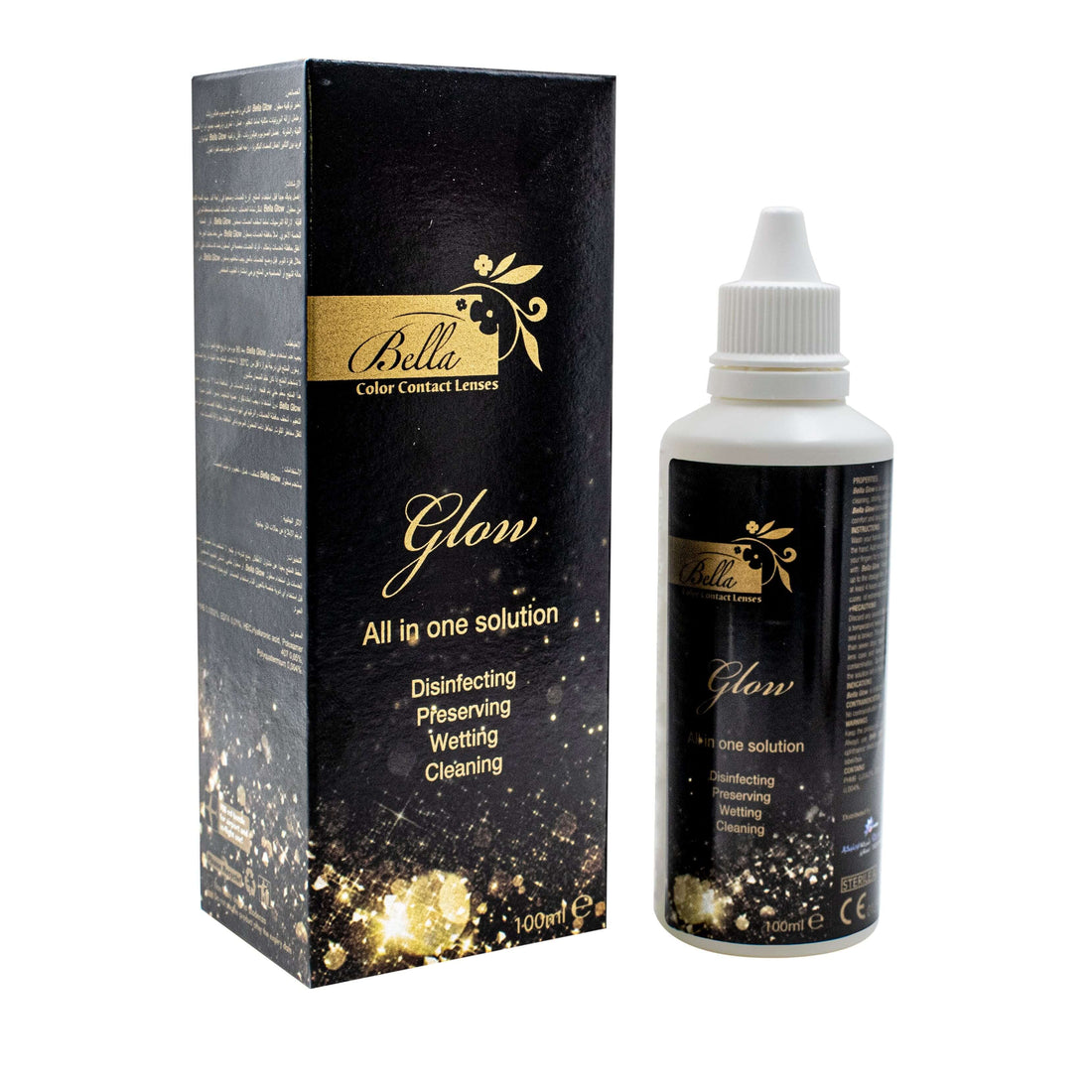

Coloured contact lenses for dyslexia are precision-tinted soft lenses designed to reduce visual stress, a condition affecting around one in three people with dyslexia. By filtering specific wavelengths of light, they help stabilise text on the page and reduce eye strain during reading. In the UK, they are available as ChromaGen or Cerium contact lenses, fitted by specialist optometrists following a colorimetry assessment.
If your child comes home exhausted from reading, or you find yourself losing the line every few minutes, visual stress may be contributing to those difficulties. This guide explains how coloured contact lenses for dyslexia work, what is available in the UK, and whether they are worth exploring for you or your child.
What Are Coloured Contact Lenses for Dyslexia – and How Are They Different from Overlays?
Not everyone with dyslexia experiences visual stress. Around one in three people with dyslexia also have visual stress, a separate condition where the brain's visual cortex becomes overexcited when processing high-contrast patterns like black text on white paper, causing text to shimmer, move, or blur. Coloured lenses for dyslexia address this specific problem by placing a precision-tinted filter over the eye to calm that overexcitability and stabilise the visual signal reaching the brain.
Common symptoms that suggest visual stress may be present include:
- Words appearing to move or jump on the page
- Letters blurring or doubling after a few minutes of reading
- Headaches or eye strain during sustained reading
- A preference for coloured paper or coloured screen backgrounds

There are three main formats of colour intervention. The table below sets out the key differences for parents and adults comparing options.
|
Coloured Overlays |
Tinted Glasses |
Coloured Contact Lenses |
|
|
Cost |
£5–£15 |
£150–£400+ |
£200–£500+ |
|
Convenience |
Low – desk only |
Medium – frames required |
High – discreet, all-day |
|
NHS funded? |
Sometimes |
Rarely |
Not funded |
|
Best suited for |
First trial; younger children |
Regular desk readers |
Active adults; older children |
Overlays are the natural starting point because they are low cost and risk-free. If a child consistently reaches for their overlay after several weeks, progression to tinted glasses or contact lenses is worth considering. For adults in professional environments where overlays are impractical, coloured contact lenses offer the most flexible and discreet solution.
See more: Types of Contact Lenses: A Complete Guide to Finding Your Perfect Fit
Do Coloured Contact Lenses Actually Work? Here Is What Parents and Adults Should Know
This question deserves an honest answer. The evidence is real but not yet conclusive, and understanding that distinction matters before committing several hundred pounds to assessment and lenses.
A 1999 British clinical study found that coloured lenses helped people with visual dyslexia. A ChromaGen study involving 434 patients reported that 91% showed more than a 45% improvement in reading speed and accuracy over six months. However, the Royal College of Ophthalmologists and the American Academy of Ophthalmology have stated that the evidence does not yet meet the threshold for formal clinical endorsement, and some researchers argue the improvement may be partly a placebo effect.
The practical position for parents and adults is this: the intervention is not harmful, a proper assessment costs a moderate amount, and a meaningful proportion of people with visual stress symptoms do report genuine improvement. If a colorimetry assessment confirms a strong response to a specific colour, the probability of benefit is considerably higher than self-selecting a tint without professional guidance.
The people most likely to benefit have a clear visual stress component to their reading difficulties. If the primary difficulty is phonological, meaning it involves recognising sounds and letter combinations rather than visual comfort, coloured lenses are unlikely to make a meaningful difference.
What to expect in the first weeks:
|
Timeframe |
What typically happens |
|
Week 1–2 |
Some wearers notice improvement at the colorimetry assessment. Others need adjustment time. |
|
Week 3–4 |
Eye strain during sustained reading typically reduces. |
|
Week 6–8 |
Most people who will benefit have reached a stable improvement. A review with the optometrist is recommended. |
|
3 months+ |
Re-assessment is advised to confirm the colour remains optimal. |
What Types of Coloured Lenses Can You Get for Dyslexia in the UK?
In the UK there are two specialist contact lens options for visual stress, both available only through certified optometrists after a formal colorimetry assessment.
ChromaGen is the most established brand for coloured contact lenses for dyslexia in the UK. Developed at Clatterbridge Hospital in Cheshire and patented in 1997, it uses nine precision-tinted filter colours. Blue and Aqua are most commonly prescribed for dyslexia coloured lenses. ChromaGen contacts are available with or without a corrective prescription but must be obtained through a licensed practitioner.
Cerium tinted contact lenses are soft lenses where the central optical zone is tinted with the specific colour identified through colorimetry. They can incorporate a corrective prescription and are available through specialist optometrists across the UK.
If you or your child has astigmatism, toric coloured contact lenses are available and can correct astigmatism while providing a tinted filter. Options are more limited and costs are higher, but the route exists. Raise this with your optometrist at the assessment stage.
See more: How to Read a Contact Lens Prescription: 15 Real Examples Explained

How to Get Coloured Contact Lenses for Dyslexia in the UK: A Step-by-Step Guide
Most articles explain what dyslexia contact lenses are but stop short of explaining how to actually get them. The route involves four steps.
Step 1 – Standard eye test first. A standard eye test rules out underlying refractive errors before colorimetry begins. Children under 16 and young adults under 19 in full-time education are entitled to a free NHS sight test.
Step 2 – Colorimetry assessment. A specialist optometrist uses an Intuitive Colorimeter to identify the precise colour and saturation that reduces visual discomfort. The process takes 60 to 90 minutes and costs £80 to £150 privately. Specialist practitioners can be found through the Society for Coloured Lens Providers (S4CLP) UK directory.
Step 3 – Contact lens fitting. A separate appointment measures corneal curvature, tear film, and eye dimensions. A new fitting is required even if you already wear contact lenses, as tinted lenses have different parameters. Cost: £50 to £100 additional.
Step 4 – Sourcing your lenses. ChromaGen and Cerium lenses are ordered through the fitting optometrist. For standard coloured contact lenses with a valid prescription, online UK retailers including BellaLense offer a wide range with free UK express delivery.
Browse prescription coloured contact lenses at BellaLense

How Much Do Coloured Contact Lenses for Dyslexia Cost – and Does the NHS Pay?
Cost is one of the most searched questions about coloured contact lenses for dyslexia, and one of the least clearly answered on most websites.
The initial assessment and fitting typically amounts to £130 to £250 before any lenses are purchased: colorimetry at £80 to £150 and a contact lens fitting at £50 to £100. ChromaGen and Cerium specialist lenses cost approximately £100 to £300 per year through the fitting optometrist. Standard prescription coloured contacts purchased online with a valid prescription are considerably more affordable.
For most parents and adults in England, the NHS does not cover this cost. The majority of NHS Integrated Care Boards do not fund colorimetry or tinted lenses for dyslexia or visual stress. Mid and South Essex ICB formally designated this as low clinical priority in April 2024, and Bedfordshire, Luton and Milton Keynes ICB holds a similar policy. The standard NHS optical voucher does not extend to specialist tinted lenses, and Disabled Students' Allowance does not cover prescription lens costs. Most families and adults should expect a private cost, though it is worth checking your local ICB policy for any exceptions.
See more: Why Are My Contact Lenses So Expensive? Explore the Truth

Frequently Asked Questions About Coloured Contact Lenses for Dyslexia
Can children wear coloured contact lenses for dyslexia?
Most UK optometrists recommend waiting until age eight to ten, when children can manage lenses responsibly. Overlays or tinted glasses are the standard first option for younger children.
Do coloured contact lenses work for everyone with dyslexia?
No. Coloured lenses for dyslexia only help those whose difficulties include a visual stress component. Purely phonological difficulties will not respond to colour intervention.
Some wearers notice improvement at the colorimetry assessment itself. For most, meaningful improvement in reading comfort appears within two to four weeks of consistent daily wear.
Can I get coloured contact lenses if I have astigmatism?
Yes. Toric coloured contact lenses are available for people with astigmatism. If your astigmatism is mild, standard coloured contacts may be sufficient. Discuss this with your optometrist.
What is the difference between Irlen lenses and ChromaGen or Cerium?
Irlen uses its own US-based diagnostic method. ChromaGen and Cerium are UK brands using the Intuitive Colorimeter. All reduce visual stress through colour filtration but differ in assessment method and tint precision.
Are coloured contact lenses safe to wear every day?
Yes, when properly fitted. ChromaGen and Cerium are soft lenses held to the same safety standards as any other contact lens. Follow your optometrist's guidance on wear schedule and care routine.
Do I need a prescription to buy coloured contact lenses in the UK?
Yes. All contact lenses in the UK, including cosmetic ones with no corrective power, are classified as medical devices and require a valid contact lens prescription.
Can coloured lenses help with reading on screens as well as printed text?
Many wearers report improvement on both print and digital screens. Screen adjustments like warm display tones can complement lenses but are not a substitute for a professionally determined colour filter.
How do I know which colour is right for my child or for me?
There is no way to reliably self-select a colour. The correct hue and saturation must be determined through a professional colorimetry assessment. Overlays can indicate whether colour helps, but not which tint is needed.
Can coloured contact lenses work alongside other dyslexia support?
Yes. They address visual stress specifically and work best combined with structured literacy support, assistive technology, and any interventions from an educational psychologist.
Coloured contact lenses are not a cure for dyslexia and will not help everyone. But for parents and adults whose reading difficulties include a visual stress component, they offer something overlays and tinted glasses often cannot: a discreet, all-day solution that works in every environment, from a school desk to a meeting room to a phone screen. The right first step is a professional colorimetry assessment to confirm whether colour is likely to help and, if so, which precise tint is needed. Once that is established, BellaLense stocks a full range of prescription and non-prescription coloured contact lenses with free UK express delivery.
See more: Contact Lenses for Long Sightedness: Types, Options & Coloured Lenses
This article is for informational purposes only and does not constitute medical advice. Always consult a UK-registered optometrist before purchasing coloured contact lenses. Contact lenses are medical devices; your eye health should always come first.