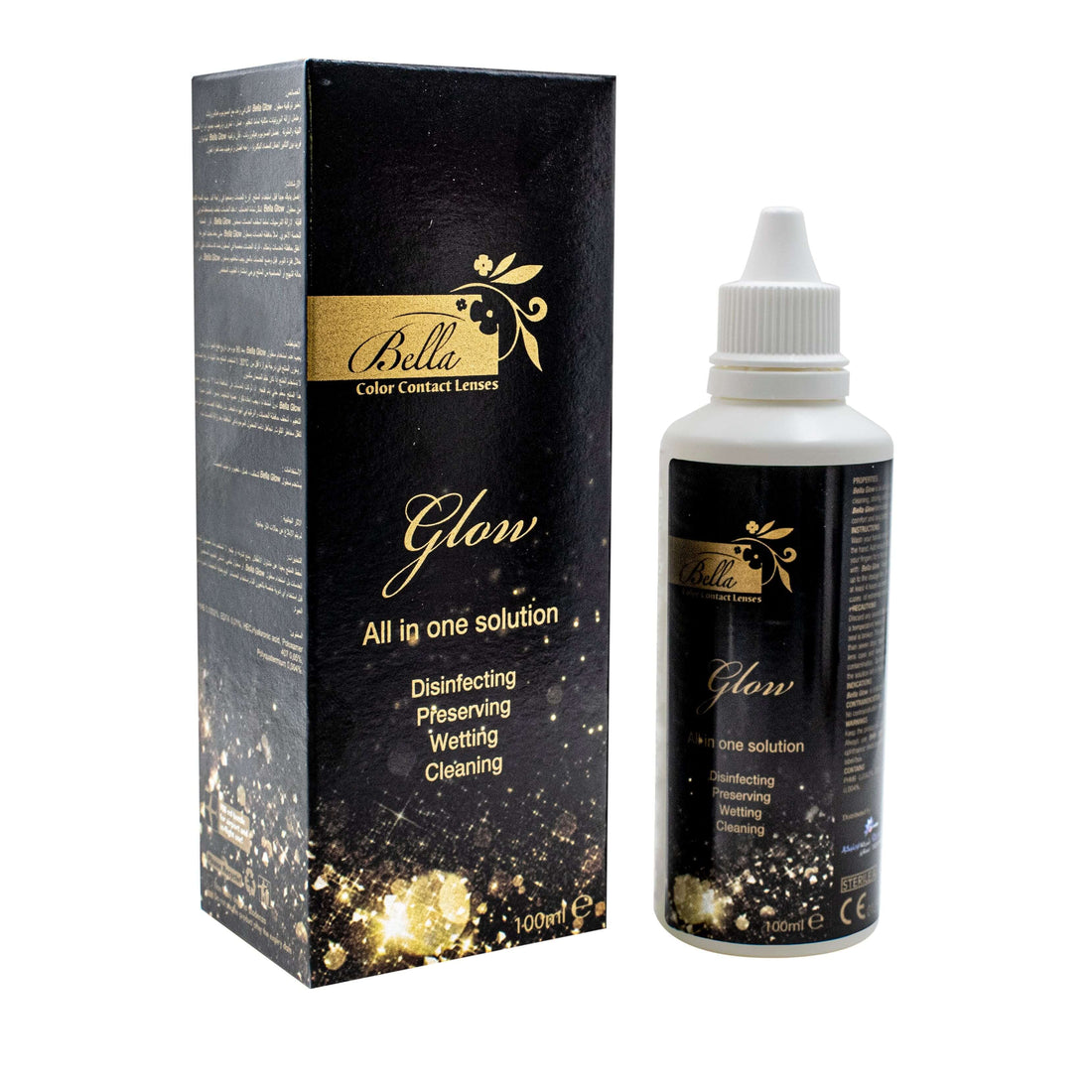

A contact lens that won't come out has almost certainly dried out and is temporarily adhering to the eye surface. Apply two to three drops of sterile rewetting solution, wait 30 seconds, blink gently, and try again. The lens cannot go behind your eye and is always retrievable with the right technique.
If your contact lens won't come out, the first thing to know is that it cannot go behind your eye. What has almost certainly happened is that the lens has dried out, shifted, or folded. This guide covers every stuck-lens scenario with specific steps for each one, and clear guidance on when to stop trying and call for help.

First: Can the Lens Go Behind Your Eye?
No. The conjunctiva, a thin membrane lining the inside of your eyelids, creates a sealed pouch that prevents any contact lens from passing behind the eyeball. If your lens feels like it has disappeared, it has almost certainly folded, shifted off-centre, or moved under a lid. It is still on the front surface of your eye.
How to Confirm the Lens Is Still in Your Eye
Close your eye and move your eyeball gently in different directions; a lens under the lid creates a slight firmness you can feel through the skin. If you feel no sensation at all, the lens may have already fallen out. Check your clothing, the surface around you, and the sink before continuing.
Before You Attempt Removal
Two steps before you touch your eye make the difference between a quick result and ten frustrated minutes.
Wash hands with soap for 20 seconds and dry with a lint-free cloth. Wet fingertips cannot grip soft lens material, and unwashed hands are a primary route of corneal infection.
Apply 2 to 3 drops of preservative-free rewetting drops or sterile saline. Blink five or six times to spread the drops, then wait 30 to 60 seconds. Our guide to contact lens eye drops explains which types are safe and which to avoid. This single step resolves most stuck-lens situations before any physical technique is needed.

Step-by-Step Removal by Scenario
Where the lens is determines which approach to use. Identify your scenario first, then follow the matching technique.
Stuck Contact Lens: Scenario Guide
|
Scenario |
What you notice |
Recommended approach |
Key technique |
Warning |
|---|---|---|---|---|
|
Centred on cornea, dried out |
Lens visible but won't grip when touched |
Rewetting drops + wait 60 seconds |
Close eye + massage upper lid downward; slide lens to white of eye; pinch and lift from there |
Never pinch directly off the cornea |
|
Shifted off-centre |
Blurred vision; something feels to one side |
Look opposite to where lens feels |
Blink; look opposite direction; massage eyelid toward centre; rehydrate then remove normally |
Gentle pressure only; no lateral force on eye |
|
Under upper eyelid |
Sensation above; lens not visible |
Look down; apply drops |
Gently roll upper lid upward; locate lens edge; slide it down to cornea; remove normally |
Stop if pain sharpens during eyelid manipulation |
|
Under lower eyelid |
Mild sensation below; not visible |
Look up; pull lower lid gently down |
Spot lens; slide up to cornea; blink to centre; standard pinch removal |
Usually the easiest scenario; do not rush |
|
Folded or rolled |
Localised firmness; discomfort in one area |
Generous drops; wait 60 sec without touching |
Do not massage; let moisture work; blink naturally to help it unfold |
Do not force a folded lens; see note below |
The most important rule across all scenarios: slide the lens onto the white of the eye (sclera) before pinching. The cornea is far more sensitive than the sclera and pinching directly off it risks a painful abrasion.
Centred on the Cornea but Dried Out
After rehydrating, close your eye and massage the upper eyelid gently downward until you feel the lens begin to move. Once mobile, use the pad of your index finger to slide it down onto the white of your eye, then pinch it free with the pads of your thumb and index finger. Pads only, not fingertips or nails.
Shifted Off-Centre
Look in the direction opposite to where the lens feels. Blink repeatedly and massage the closed eyelid gently toward the centre. Once the lens is back over the coloured part of your eye, rehydrate and remove normally using the slide-then-pinch method.
Hidden Under the Eyelid
Upper lid: look downward as far as comfortable, gently roll the upper lid upward with a clean fingertip, locate the lens edge, then slide it down to the cornea and remove. Lower lid: look upward and pull the lower lid gently down until the lens becomes visible, then slide it up to the cornea.
Folded or Rolled Inside the Eye
Apply generous drops and wait a full 60 seconds without touching the eye. Moisture often unfolds the lens on its own; blink naturally and let the eye do the work. If the lens appears torn rather than simply folded, our guide to what to do if a contact lens breaks in your eye covers fragment removal step by step.
Coloured Contact Lenses: Does Removal Work Differently?
The technique is the same, but two design features mean a contact lens won't come out quite as easily with coloured lenses as with clear ones.

Larger Diameter and Pigment Layer
Many coloured lenses are 14.0 to 14.5mm across versus 13.8mm for most clear dailies, so more surface area can stick when dehydrated. The pigment layer also makes a dried coloured lens feel slightly less flexible than a clear lens of the same material. Apply more drops, wait longer, and if your coloured contact lens won't come out on a regular basis, check that you are following the replacement schedule exactly, since overdue lenses lose moisture retention faster.
Bella Lense stocks CE-marked coloured contact lenses designed for comfortable everyday and occasional wear. Browse our coloured contact lens collection to find options suited to your wearing habits.
What to Do After the Lens Is Out
Once a contact lens won't come out and finally releases, give your eye a few minutes to settle before drawing any conclusions.
Normal After-Effects vs Signs of a Corneal Scratch
Mild redness, watering, and grittiness for 10 to 20 minutes are normal after a difficult removal. Do not insert a new lens. If pain is increasing rather than fading, or significant light sensitivity develops, this can indicate a corneal abrasion. Our guide to what to do if you scratch your eye removing a contact lens covers the signs, UK emergency care options, and the full recovery timeline.
When to Wear Lenses Again
For a mild episode that settled within 20 minutes, wait until the following day. For any episode requiring prolonged effort or leaving the eye uncomfortable for more than an hour, rest for 24 to 48 hours and start with a shorter session when you return.
When to Stop Trying and Call for Help
Most stuck lenses resolve within a few careful attempts. If yours has not, stop rather than continue. Our article on what happens if a contact lens gets stuck behind the eye addresses common fears about lenses that cannot immediately be located.
When to Stop and Where to Get Help
|
Situation |
Time threshold |
What to do |
|---|---|---|
|
Lens removed; mild redness and grittiness only |
Normal settling, up to 20 minutes |
Rest; no lens today; use lubricating drops; monitor |
|
Lens won't move despite rewetting and 2 to 3 gentle attempts |
After 15 minutes of attempts |
Stop all attempts; contact optometrist same day |
|
Cannot locate lens after checking all eyelid positions |
After 10 minutes of searching |
Stop; optometrist same day to confirm no fragment remains |
|
Pain is increasing during or after attempts |
Immediately |
Stop; call NHS 111 or optometrist today; do not retry |
|
Pain, vision change, or unusual discharge |
Immediately |
Attend A&E or NHS Eye Casualty; no GP referral needed |
After 15 minutes of properly lubricated attempts, continuing at home is unlikely to succeed and raises the risk of corneal damage. An optometrist can remove a stuck lens quickly and examine the eye surface at the same appointment.
Finding Urgent Eye Care in the UK
Call NHS 111 for same-day direction to the nearest eye care service. Most major NHS eye hospitals operate a walk-in eye casualty that does not require a GP referral. For pain, vision changes, or discharge, go directly to A&E.

Why Does Your Lens Keep Getting Stuck?
A contact lens won't come out repeatedly when one of three fixable causes is at work.
- Dry eyes and overwear: the tear film thins and the lens dehydrates faster than usual. Use preservative-free rewetting drops proactively before the eye feels uncomfortable, not after.
- Environment: air-conditioned offices, long flights, and screen-heavy days all strip lens moisture. Apply drops more frequently in these settings, or switch to glasses.
- Fit and replacement schedule: a wrong base curve or overdue lens replacement makes contact lens not coming out a recurring problem. An optometrist aftercare appointment can identify and fix both.
Frequently Asked Questions
Can a contact lens get stuck behind your eye?
No. The conjunctiva creates a sealed barrier at the back of the eye socket that makes it physically impossible for a contact lens to move behind the eye.
Is it dangerous if my contact lens won't come out?
A stuck contact lens is not usually dangerous if resolved promptly. The risk increases if you sleep in the lens or apply excessive force during removal attempts.
What should I do if I cannot find my contact lens?
Check all four eyelid positions in a well-lit mirror. If the lens is genuinely not visible after careful checking, it may have fallen out during a previous attempt.
Can I sleep with a contact lens that won't come out?
No. Sleeping in a stuck lens reduces corneal oxygen and raises infection risk. Apply rewetting drops and try again gently, or call NHS 111 for guidance.
Why won't my coloured contact lens come out?
Coloured lenses have a slightly larger diameter than most clear lenses, creating more surface contact with the eye. Generous rewetting drops and waiting longer before attempting removal usually resolves this.
How long should I try before calling an optometrist?
If gentle attempts with rewetting drops have not worked after 15 minutes, stop trying and contact your optometrist or call NHS 111 for same-day guidance.
What if my eye is still red and sore after removing the lens?
Mild redness for up to 20 minutes is normal. If pain increases or light sensitivity develops after removal, contact your optometrist the same day rather than waiting.
Conclusion
A contact lens that won't come out is almost always straightforward to resolve. Contact lens not coming out after rehydration usually means a scenario has been misidentified. Rehydrate first, identify your scenario, and never force the lens. If 15 minutes of careful attempts have not worked, stop and contact your optometrist. There is no situation where pulling harder helps.
Disclaimer
This guide is for general informational purposes and does not replace professional eye care advice. If you experience increasing pain, vision changes, or discharge during or after lens removal, contact a registered optometrist or attend NHS Eye Casualty.