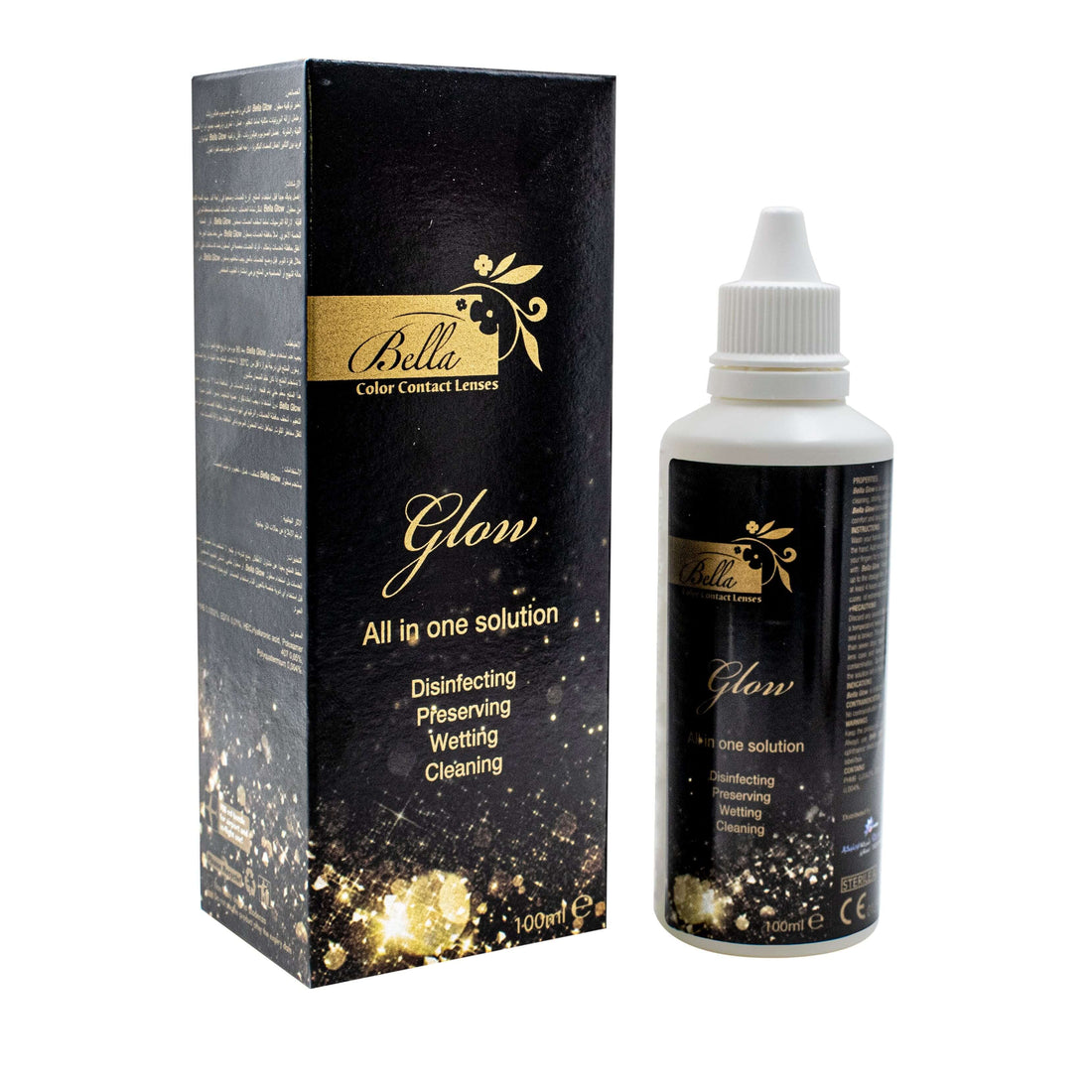

To care for contact lenses properly, wash and dry your hands before every insertion and removal, rub and rinse your lenses with fresh multipurpose solution each time you remove them, and store them in a clean lens case filled with fresh solution overnight. Never top up old solution, never use tap water, and replace your lens case every month.
Looking after contact lenses is simpler than most beginners expect, but certain steps are non-negotiable. This guide covers the essential daily habits, the specific routine for monthly contact lenses, how to care for coloured lenses, which solution to use, and what to expect in your first weeks.

The Essential Rules for Caring for Contact Lenses
Four fundamentals underpin all contact lens care. Get these right and you remove the vast majority of risk from everyday lens wear.
Wash and dry your hands every time
Wash with plain soap containing no moisturisers, oils, or fragrances before touching your lenses or your eyes. These leave a residue that transfers onto the lens surface. Dry with a clean, lint-free towel – paper towels work well. Damp hands introduce bacteria as effectively as unwashed ones.
Rub your lenses even when the solution says no-rub
The rub-and-rinse technique physically dislodges protein deposits, oils, and makeup particles that soaking alone cannot shift. Place the lens in your palm, add a few drops of fresh solution, and rub gently with your fingertip for ten to fifteen seconds per side. UK eye care professionals consistently recommend this step regardless of what the solution label says.
Never use tap water on your lenses or lens case
Tap water contains microorganisms including Acanthamoeba, which can cause Acanthamoeba keratitis – a serious corneal infection that is very difficult to treat. Use only sterile contact lens solution for every step: cleaning, rinsing, and case care. This applies to bottled water too. Only contact lens solution is safe.
Replace your solution every single day
Empty the case completely each evening, rinse with fresh solution, and refill before storing your lenses. Topping up yesterday's solution dilutes its disinfecting ability and allows bacteria to multiply. Fresh solution, every night.
See more: How to Clean Contact Lenses Properly: Step-by-Step Guide

How to Care for Monthly Contact Lenses: Your Daily Routine
Monthly lenses require attention every morning and evening. The routine is quick once it becomes habit, but skipping steps – even occasionally – is where most lens-related problems start.
Morning: inserting your monthly lenses
Open your lens case and inspect each lens before inserting it. Hold it to the light and check for visible tears, deposits, or any change in appearance. If anything looks wrong, replace the lens. Rinse with fresh solution before insertion, check orientation using the bowl test (smooth curved edges are correct; flared edges mean the lens is inside-out), and insert with clean dry hands.
Evening: the nightly cleaning routine
Remove lenses one at a time. Place each in your clean palm, add three to four drops of multipurpose solution, and rub gently for ten to fifteen seconds on both sides. Rinse with a fresh stream of solution. Place in a clean case filled with fresh solution and leave to soak overnight. After use, empty and rinse the case with solution, then leave it face-down on a clean tissue to air-dry during the day.
Weekly and monthly case care
Rinse your case with solution every morning after removing lenses – never with water. A case rinsed and air-dried daily stays significantly cleaner than one left in used solution. Replace the lens case every month. Even a well-maintained case accumulates microbial contamination over time that rinsing alone cannot fully clear.
See more: How Often Should You Replace Your Contact Lenses?
Choosing the Right Solution for Your Contact Lenses
The solution you use is as important as the technique. The table below outlines the three main options available in the UK.
|
Solution type |
What it does |
Best for |
Key point |
|---|---|---|---|
|
Multipurpose solution (MPS) |
Cleans, rinses, disinfects, and stores in one product |
Most monthly and two-weekly wearers |
Most convenient; check lens brand compatibility |
|
Hydrogen peroxide solution |
Deep cleans and disinfects; must be neutralised before insertion |
Sensitive eyes; heavy deposit wearers |
Must use neutralising case; never insert before neutralisation |
|
Saline solution |
Rinses only – no cleaning or disinfecting |
Final rinse after peroxide neutralisation |
Not a standalone care product; cannot replace MPS |
Multipurpose solution is the default recommendation for first-time monthly lens wearers and covers the vast majority of people's needs. Hydrogen peroxide suits those who experience persistent irritation or sensitivity with MPS preservatives, but requires a longer soaking process and a specific neutralising case. Always follow your optician's recommendation for your specific lens material.

How to Care for Coloured Contact Lenses
Coloured contact lenses follow the same cleaning routine as clear monthly lenses, but a few specific points make the routine even more important for this lens type.
Why the rub step matters more for coloured lenses
The pigment layer in coloured lenses creates additional surface texture compared to clear lenses. Protein deposits and makeup particles adhere to this layer more readily, affecting both comfort and the clarity of the colour effect. Skipping the rub step leads to buildup that is harder to remove and can dull the colour over time.
Makeup and coloured lens care
Insert your coloured contact lenses before applying any eye makeup. Remove lenses before using makeup remover, particularly oil-based formulas, which coat the lens surface and are difficult to clean off. Mascara and liner particles that reach a coloured lens sit on the pigment layer and cause irritation if they build up across multiple wears.
Storing coloured lenses between wears
Store coloured monthly lenses in fresh multipurpose solution in a clean case after every session, exactly as with clear monthly lenses. When you remove them from their case, inspect against a light source before inserting. Visible deposits, discolouration, or any change in appearance are signs to replace the lens early.
Daily Disposables vs Monthly Lenses: Care Comparison
If you are weighing up which format to choose, the care difference between daily and monthly lenses is one of the most practical factors.
|
Daily disposable lenses |
Monthly contact lenses |
|
|---|---|---|
|
Cleaning after removal |
None – discard after one wear |
Yes – rub, rinse, store every evening |
|
Solution required |
No |
Yes – MPS or hydrogen peroxide |
|
Lens case required |
No |
Yes – replace monthly |
|
Infection risk from care errors |
Very low – fresh sterile pair daily |
Higher – rises with inconsistent routine |
|
Travel convenience |
High – no bottles or case to pack |
Lower – solution and case required |
|
Care time per day |
None |
Around 2–3 minutes |
Daily disposable lenses eliminate the care routine entirely because each pair is worn once from a sterile sealed pack and then discarded. If you find monthly care difficult to maintain consistently, or if you wear lenses occasionally rather than every day, daily lenses remove the risk of care errors completely. For daily contact lenses that need no cleaning or storage, they are the simplest option for beginners and occasional wearers.

Contact Lens Care for Beginners: What to Expect in Your First Weeks
Building a care routine takes a few days to feel natural. Knowing what to expect at each stage removes most of the anxiety.
Week 1 – focus on hygiene above all else
In your first week, insertion and removal will feel slow, which is completely normal. The priority is getting every hygiene step right. Wash hands every time, rub your lenses every evening without skipping, and rinse the case with fresh solution after every use. Do not try to cut time at this stage.
Week 2–3 – routine becomes faster and more automatic
By week two, the routine should feel quicker and more confident. Check your case habits: are you air-drying it correctly? Replacing solution rather than topping it up? These are the steps beginners most often start to skip, and they matter just as much in week three as in week one.
Signs to act on immediately
Remove your contact lenses straight away if you notice sharp pain that does not ease, sudden vision changes, significant redness, or unusual discharge. Do not reinsert the lens. If symptoms persist after removal, contact your optician or seek same-day care.
See more: Are Contact Lenses Safe? Expert Advice on Risks, Benefits and Proper Care
Frequently Asked Questions
The questions below reflect what UK contact lens wearers ask most often about caring for their lenses.
How do you care for monthly contact lenses properly?
Remove them each evening, rub and rinse both sides with fresh multipurpose solution for 10–15 seconds, store in a clean case with fresh solution overnight, and replace the case monthly. Never use tap water at any stage.
Do coloured contact lenses need special solution?
No. Standard multipurpose solution is suitable for coloured monthly lenses. No specialist solution is needed. The rub-and-rinse step is particularly important for coloured lenses to prevent pigment layer buildup.
Can you top up contact lens solution in the case?
No. Used solution must be discarded completely each day. Topping up dilutes the disinfecting effectiveness and allows bacteria to accumulate. Always use completely fresh solution every night.
How often should you replace your contact lens case?
Every month as a minimum, and immediately if the case cracks, discolours, or develops residue that does not rinse off. Monthly replacement prevents microbial contamination even with daily rinsing.
Can you sleep in monthly contact lenses?
Most monthly lenses are not designed for overnight wear. Sleeping in contact lenses significantly increases infection risk by reducing oxygen flow to the cornea. Remove them every night unless your optician has specifically prescribed extended-wear lenses.
Contact lens care becomes second nature within two weeks for almost everyone who commits to the routine from day one. The essentials are the same whether you wear clear or coloured lenses: clean hands, the rub-and-rinse technique, fresh solution every night, and monthly case replacement. Get these right and your lenses will stay comfortable, clear, and safe.
See more: How to Fix Blurry Contact Lenses
This article is for informational purposes only. Always follow your UK-registered optician's specific guidance for your lens type and eye health needs.